
Global MCap:
24h Volume:
BTC Dominance:
ETH Dominance:
Fear & Greed:

Global MCap:
24h Volume:
BTC Dominance:
ETH Dominance:
Fear & Greed:
Published November 26, 2026
• Updated November 26, 2026
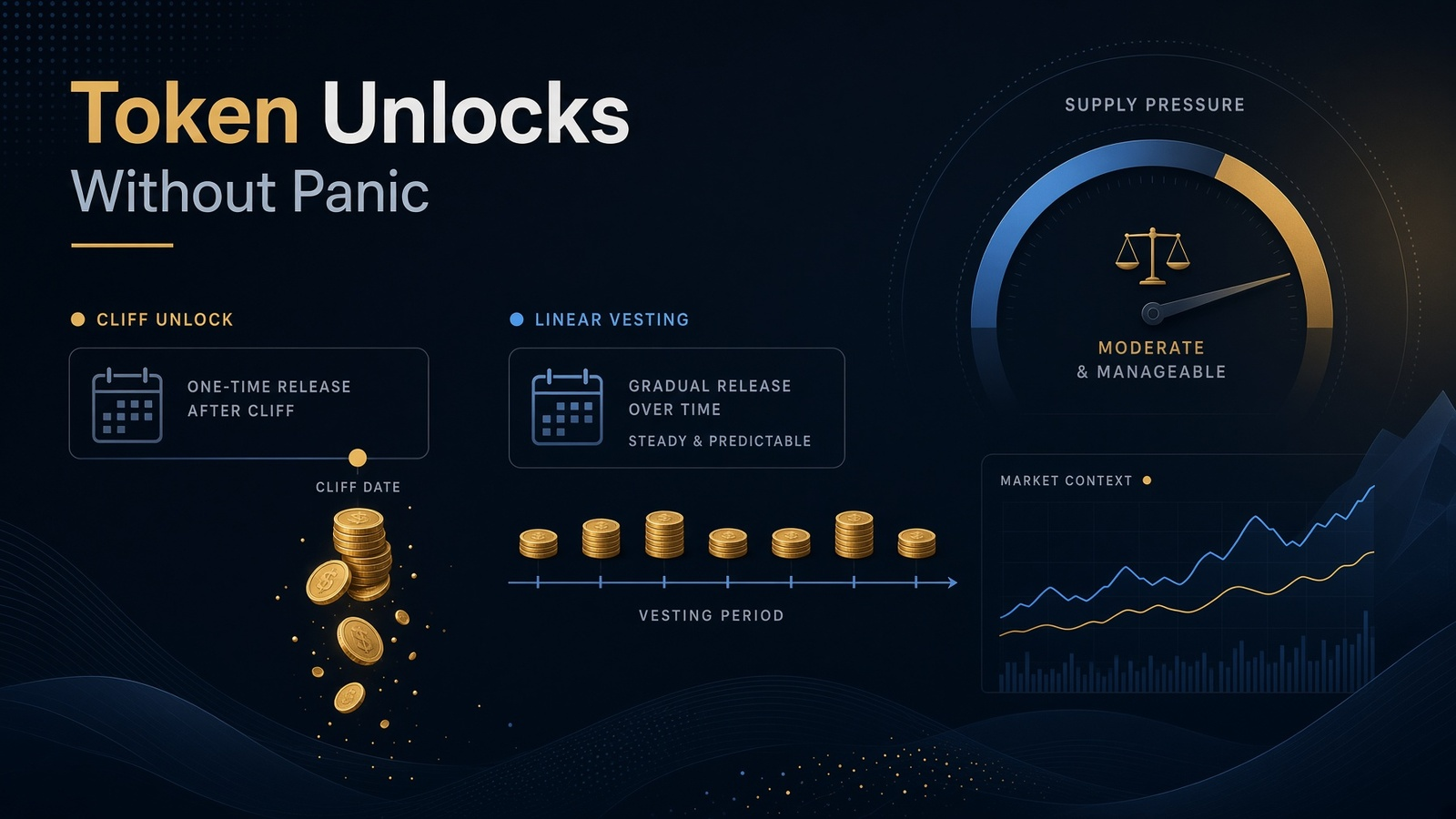
Token unlock calendars light up social feeds every week, and late November into December 2026 is no exception. With major cliff events such as Monad (MON) on November 24, scheduled releases for HYPE, EIGEN, and STABLE, and recurring monthly tranches across ecosystems like ARB, ENA, and SUI, traders frequently treat every scheduled unlock as an automatic sell signal.
Yet real-world data tells a more nuanced story. In a defensive market where Bitcoin dominance hovers around the upper-50s near 60% and broader risk appetite remains cautious, fresh supply matters—but how tokens unlock, who receives them, and whether buyers have enough liquidity to absorb them often matter far more than the headline dollar figure on a tracker.
Not all new token supply hits the market the same way. Confusing a one-time cliff with slow linear vesting or protocol emissions leads to mispriced risk:
Research from market maker Keyrock covering more than 16,000 unlock events highlights how markets often price these schedules in advance: selling pressure frequently begins weeks before the unlock date and stabilizes shortly after, while team allocations tend to create sharper order-book pressure than ecosystem grants or OTC-settled fund tranches.
A common mistake when reading unlock trackers is treating every number on a dashboard as immediate market sell pressure. Two discrepancies show up repeatedly across projects:
Supply is only half of the equation. A modest unlock can weigh on a token if daily spot volume is dry and traders are sitting in cash or stablecoins, whereas a larger release can be absorbed smoothly if real usage and buyer depth are growing.
Before reacting to an upcoming unlock on your watchlist, check four practical factors:
| Token / Example | Unlock Dynamic (Late Nov–Dec 2026) | Key Research Takeaway |
|---|---|---|
| MON | Major cliff milestone on Nov 24 after initial lock period | Watch post-cliff liquidity, float expansion, and buyer absorption |
| HYPE | Large headline calendar figures vs. smaller actual contributor distribution | Verify real on-chain transfers instead of relying solely on calendar estimates |
| EIGEN & ARB | Recurring monthly / scheduled tranches (e.g., EIGEN on Dec 1; monthly ARB) | Treat as ongoing supply dilution that requires steady organic demand to offset |
| STABLE | Large scheduled release on Dec 8 relative to current market cap | Pay close attention to dilution relative to circulating float and liquidity depth |
Does a token unlock always cause the price to crash? No. While added supply can create headwinds—especially when markets are cautious—prices often react weeks ahead of the event, and actual impact depends on liquidity, recipient behavior, and broader market demand.
What is the difference between a cliff unlock and linear vesting? A cliff unlock releases a lump sum at once after a waiting period, whereas linear vesting releases smaller portions steadily over time (such as monthly or daily).
Why do different trackers sometimes show different unlock numbers for the same token? Trackers may model vesting schedules differently or count treasury and reserve allocations as unlocked even when those tokens are not actively trading on open markets.
Token unlocks are a normal part of crypto market structure, not a reason to panic or guess blindly. By checking vesting mechanics, verifying actual distributions against calendar estimates, and weighing supply against real liquidity and community conviction, you can treat unlock schedules as an analytical tool rather than a source of noise.
Want your project featured here?
List your crypto project in weekly community rankings. One-time $99 — ranked forever. Top projects get editorial coverage and 20+ social posts/week.
List My Project — $99